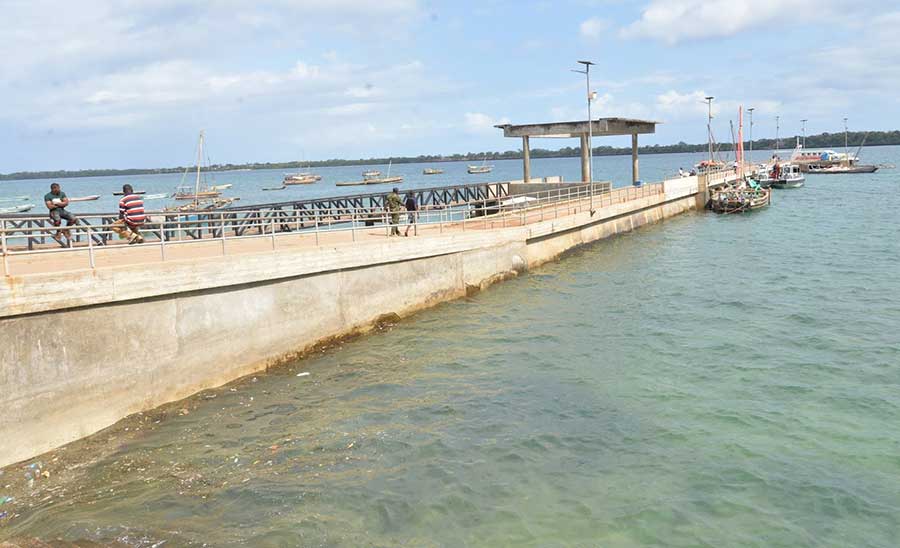
The construction of the proposed Shimoni Fishing Port in Kenya Coast has taken baby steps following a public stakeholder’s meeting for the ongoing Environmental Social Impact Assessment study, with construction planned to commence in the coming months.
This is as per the Constitution of Kenya, 2010 which requires the engagement of the citizenry in decision making before implementation of projects which affect them.
The construction of the Shimoni port is expected to have a positive impact on trade and economic growth, large scale exploitation of the fish industry bolstered by a ready market and value addition which will spur the creation of Special Economic Zones.
To protect the environment against the negative impacts of the project; a raft of measures have been recommended and will be applied to ensure smooth implementation of the project whilst minimizing environmental degradation.
Kwale Governor Hon. Salim Mvurya, who was represented at the meeting by the County Executive Committee (CEC) member in charge of Agriculture Ms. Joanne Nyamasyo, urged the Kwale residents to focus on the positive benefits of the project, which is expected to create employment opportunities and improve trade and economic empowerment of the locals.
“Let’s embrace dialogue and provide room to accommodate different views and agree on how to mitigate the negative effects to reap maximum benefits from the project,” said the County official.
The residents of Kwale have requested Kenya Ports Authority (KPA) to come up with a written MOU detailing the engagement and the expected benefits.
Addressing the meeting, KPA’s Principal Environment Officer Mr. Daniel Githinji, assured the participants of the Authority’s commitment in ensuring the success of the project without disrupting their economic livelihoods.
One of the key objectives of the Environmental and Social Impact Assessment study is to systematically assess the value of the benefits of a project against the environmental and social concerns, and equally provide measures to avoid, prevent or reduce the magnitude of the impacts.
KPA is constructing Shimoni Port which will be the premier fishing port in the country. The industrial fishing port infrastructure will include a multi-purpose berth that will incorporate fish and conventional cargo handling, cold storage facilities, reefer stations and value addition including fish processing plants.
The existing jetty will also be rehabilitated to continue serving the local fishermen and support tourism.
The Western Indian Ocean has resources worth more than Sh2.2 trillion annual output, with Kenya’s share being about 20 percent of this. The marine fishing sub-sector alone had an annual fish potential of 350,000 metric tonnes in 2013 worth Sh90 billion.
However, the region only yielded a paltry 9,134 metric tonnes worth Sh2.3 billion. Optimal exploitation marine fishing is hindered by infrastructural limitations and inappropriate fishing craft and gear.
Artisanal fishers mainly restrict their operations to the continental shelf because they are ill-equipped in terms of craft and equipment to fish in the deep sea.
The deep sea waters are left to Distant Water Fishing Nations (DWFN) who mainly fish tuna species. Kenya lies within the rich tuna belt of the West Indian Ocean where 25 per cent of the world’s tuna is caught.
Foreign fishing fleets can operate in Kenya’s Exclusive Economic Zone (EEZ) in accordance with the regional and international agreement and cooperation provision of the National Oceans and Fisheries Policy, which allows governments to continue granting fishing rights in their EEZs, taking into account the state of the stock and economic returns.
In December 2017, President Kenyatta suspended the licenses of foreign trawlers as part of efforts to grow the country’s blue economy through value addition. During the 54th commemoration of the country’s independence, he said that the ban on foreign vessels would help increase fish processed locally seven-fold to 18,000 tonnes per year.
Kenya, the president announced, loses about 10 billion shillings ($97 million) a year to foreign boats fishing without permission.