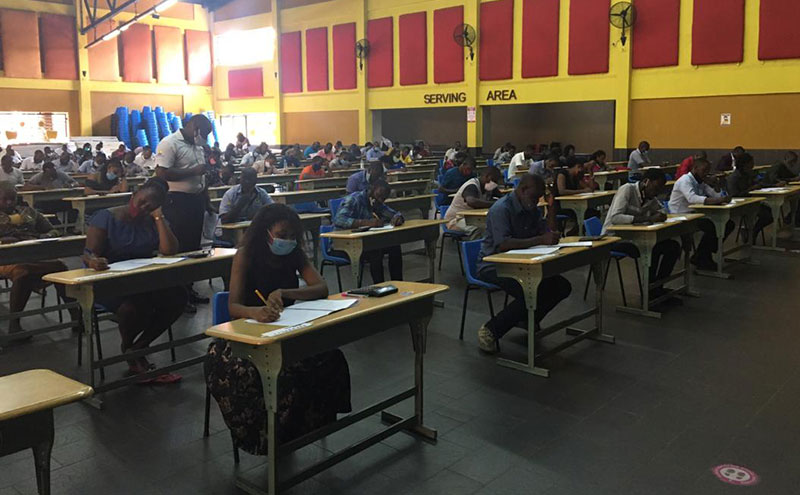
About 288 freight logistics practitioners in Uganda sat for the East Africa Customs and Freight Forwarding Practicing Certificate (EACFFPC) examinations this week.
This was the 15th intake since the training programme begun, as the region seeks to professionalize the industry in order to promote a professional, compliant and competitive freight logistics industry for trade facilitation in the East Africa.
Last week, Kenya graduated 22 while Burundi graduated 50 freight forwarders practitioners with EACFFPC last month.
Out of Burundians, 14 were female, an impressive number that demonstrate that the women are also keen on engaging in an industry that has over the years been dominated by men. It was the 5th graduation ceremony.
The EACFFPC is a mandatory training program to all Customs Agents jointly implemented by the EAC directorate of Customs, the East Africa Revenue Authorities (EARAs) and the national associations of the freight forwarding industry affiliated to the Federation of East African Freight Forwarders Associations (FEAFFA).
The training is offered to individuals already practicing or intending to practice in the clearing and forwarding industry throughout the East African region.
“We are encouraging more practitioners to enroll for the training. It has helped the freight forwarding industry in providing global best practices as more and more players join the professional pool,” said Mr. Fred Seka, FEAFFA president.
Since it was started in 2007, over 6000 customs agents and freight forwarders have graduated and qualified from the program in the region.
Trademark East Africa (TMEA) has been supporting the implementation of this program since 2011 to equip agents with desirable competencies for the provision of competitive and high-quality end to end services.
FEAFFA is currently engaging experts to review and update the EACFFPC curriculum to include among other key changes; the introduction of the Continuing Professional Development (CPD). The CPD framework and implementation guidelines and tools to guide for the implementation of the program were developed.
The new training curriculum update, which has also been supported by the TMEA under the EAC Logistics Skills Enhancement Program, will ensure that all the EACFFPC graduates are kept technically and professionally updated, as the industry takes new and dynamic trends.
FEAFFA is set to roll out the piloting of the Continuing Professional Development (CPD) training programme in Uganda before the end of the year.
FEAFFA is also working on a CPD system that will coordinate the piloting which is expected to take place in Rwanda as well. The training will be conducted by the National Curriculum Implementation Committee (NCIC) in Uganda and a schedule has been prepared to be distributed when conducting publicity.
Preparatory meetings for piloting the program have already been held in the Uganda and Rwanda. These meetings helped in drawing roadmaps on how the program piloting should be rolled out. The roadmap included the development of a comprehensive stakeholder analysis and mapping, identification of areas CPD activities will address and drawing a CPD calendar for piloting.
The CPD will test three major components; technical competencies, emerging issues and matters on leadership and personal development.
“FEAFFA has already developed the CPD framework with the implementation guidelines and tools. The tools will guide the NCIC of national associations of customs agents and freight forwarders in the region in piloting and rolling out the program in their respective countries,” Seka said an earlier interview.