South Sudan has been put on a spotlight for charging visa entry fees on residents of the other East African Partner States. This comes in the wake of the industry players seeking to have Democratic Republic of Congo (DRC) and South Sudan join the Single Customs Territory (SCT) in a bid to enhance seamless flow of the cargo along the corridor and border crossing points.
The East African Business Council (EABC) called upon South Sudan to embrace the use of the National Identity cards as a travelling document across the region.
“As it is now, South Sudan still charges visa fees to EAC citizens from EAC Partner States which do not have a bilateral agreement with the country. We also urge South Sudan to join Kenya, Uganda and Rwanda to use National IDs as travel documents,” EABC CEO, Dr. Peter Mutuku Mathuki was quoted saying.
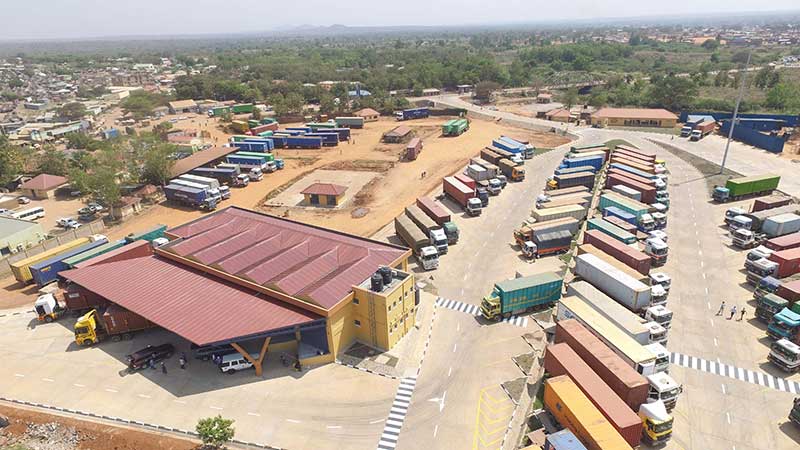
This followed a visit by the Council at the Nimule – Elegu One-Stop Border Post (OSBP) this week. The Nimule-Elegu OSBP is the main border post between South Sudan and Uganda and the busiest land border in South Sudan where most goods imported from Uganda are processed. The OSBP has been recording an average of 160 trucks crossing the border daily.
EABC in collaboration with the Private Sector Foundation Uganda (PSFU) and the South Sudan Chamber of Commerce held a meeting with the Joint Border Management Committee, deliberating on sustainable solutions on issues affecting the flow of goods and movement of persons at the border post.
On March 2, 2016, the East African Community Heads of State Summit admitted South Sudan as its newest member. Accession negotiations had commenced in November 2014. The relatively accelerated timeline to its admission was a strong indication of the willingness of all sides to admit South Sudan to the community
Dr. Mathuki noted that only the Ugandan side of the OSBP is operational, and called for the full operationalization of the Nimule-Elegu OSBP. This is set to expedite the movement of goods and people and reduce transport costs across national boundaries.
A report by the Northern Corridor Transit and Transport Coordination Authority (NCTTCA) that gave recommendations based on its first 14 observatory reports offered a raft of measures for free movement of goods across the region, which included expansion of a list of goods cleared through the Single Custom Territory.
“Uganda should consider expanding goods cleared under SCT and work towards full roll-out. It will minimise diversion of goods in transit. Border crossing has been seen as the second cause of delays,” the report noted.
To ease clearance of the cargo, the report recommended the need to synchronise all Single Window Systems. Kenya, Uganda and Rwanda have already established functional single window systems. These systems provide a platform on which Partner Government Agencies (PGA) are able to clear cargo online. The process of automating customs processes in South Sudan is currently ongoing.
The report recommended Implementation of the Regional Customs Transit Guarantee and Single Customs Declaration for the region and other trade facilitation platforms.
“Some trade facilitation instruments are not yet implemented,” the report said.
To minimise fresh declarations and bonding of goods at the border stations, the report proposed use of Regional Customs Transit Bonds for all goods whose tax is not paid to reduce border crossing and delays.
“Member states should recognise the bond executed by forwarders in the other member states,” recommends the report.
To address the challenge in exchanging information and tracking of cargo in the Northern Corridor, the Member States should expedite the implementation of a Regional Unique Consignment Reference (R-URC.)
Established in July 2014, the SCT has reduced the cost of doing business by eliminating duplication of processes. It has also reduced administrative costs, regulatory requirements and the risks associated with noncompliance on the transit of goods. This is because taxes are paid at the first point of entry for all the partner states.