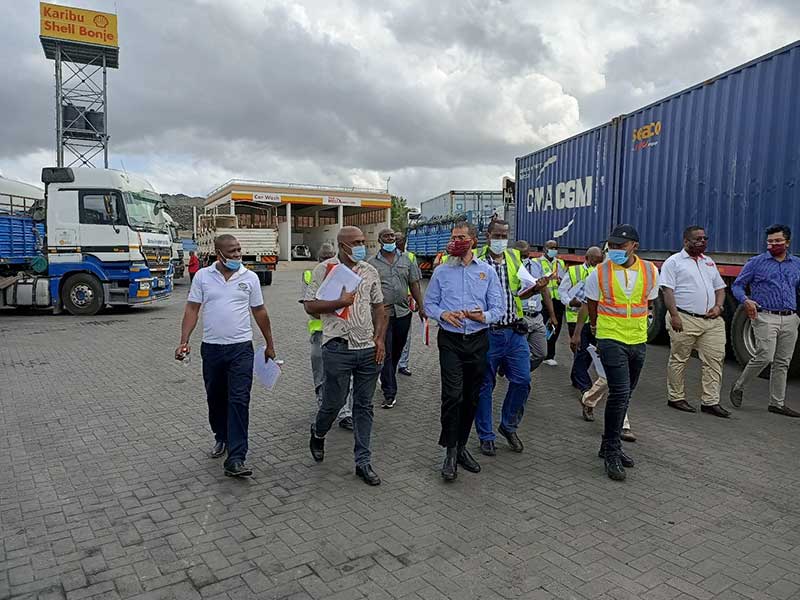
A multi-stakeholder team led by the Northern Corridor Secretariat has identified twelve parking facilities along the Northern Corridor in Kenya to be upgraded into Roadside Stations (RSS), absence of which has seen THE high number of accidents within the Northern Corridor region due to fatigue on truck drivers and growing incidences of diseases such as HIV/AIDs, Ebola, and now COVID-19 spreading across borders.
This was brought fore by a directive by the Northern Corridor Council of Ministers in response to the lack of adequate facilities for rest, medical care, maintenance, parking, and sanitation along the corridor routes; especially during the COVID-19 pandemic.
The identified parking yards with facilities similar to the Northern Corridor RSS designs that could be upgraded included Shell and Premium Energy Bonje in Miritini; Maungu Lorry Park, Sparkle Centre located in Mtito Andei and Darussalam Hotel and parking facility located in Mtito Andei.
Other stations are Delamere Holding Shop Point in Naivasha; Shell Salgaa at Salgaa; and Uasin Gishu Lorry Park by the County Government of Uasin Gishu located at Jua Kali. Other proposed parking yards viable for upgrade to RSS but at conception stage were KeNHA land in Sultan Hamud; Shell and Premium Energy in Mai Mahiu; Mundika Trailer Park – Busia County Government Project; Malaba Park by Busia County Government; and Kikopey yard between Nakuru and Gilgil.
“Since its inception in 2014, the implementation of the Northern Corridor RSS program has been ongoing despite the slow pace. The momentum in developing the required regulatory frameworks for investing in RSS by the public sector has been declining, however, the private sector has invested in facilities similar to RSS; though uncoordinated,” NCTTCA said in a statement.
A study carried out at the inception of the program had identified 141 locations for RSS out of which 67 were considered as priority locations. Out of the 67 priority locations identified along the Northern Corridor, 22 were in Kenya. The study also provided financial projections and their financial models for their development.
“Governments through their agencies should support Private Sector players and County Governments in the realization of the RSS projects by developing regulations on RSS, providing incentives to investors and providing funding for the projects,” NCTTCA said.
The Northern Corridor Secretariat developed the RSS Regional Guidelines to ensure that common designs for RSS are kept along the Corridor. This means that templates are available for use by the Members States in developing their respective National Guidelines.
The multi-disciplinary survey team tasked the Northern Corridor Secretariat to follow up with potential investors in the development and upgrading of their parking yards to suit the Northern Corridor recommended RSS standards.
The team also urged Kenya National Highway Authority (KeNHA) and County Governments to enhance their collaboration in developing RSS facilities and ensuring that road designs take into consideration the proposed standards.
In Kenya, KeNHA is expected to take the lead and hire consultancy services to develop the RSS National Guidelines.
The survey also recommended a Task Force and Steering Committee comprising members from the Ministry of EAC and Regional Development, the Ministry of Transport, Infrastructure, Housing and Urban Development, Ministry of Land, Ministry of Health, Kenya National Highways Authority (KeNHA), Public-Private Partnership (PPP) Unit, National Transport and Safety Authority (NTSA), Private Sector as well as County Government representatives to be revived to spearhead the process of developing the RSS legal framework.
As a way forward, Kenya Revenue Authority (KRA) promised to facilitate the accreditation and geo-fencing processes of the facilities that were identified during the survey to serve as RSS along the Northern Corridor.