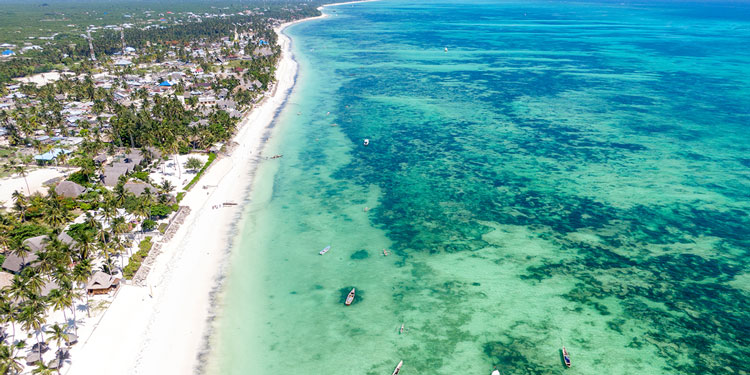
Zanzibar’s strategic embrace of the Blue Economy has yielded substantial economic and social benefits since 2020. Under President Hussein Ali Mwinyi’s leadership, the semi-autonomous archipelago has focused on sustainably leveraging its marine and coastal resources to drive growth in fisheries, tourism, and renewable energy sectors.
Upon assuming office in November 2020, President Mwinyi established the Ministry of Blue Economy and Fisheries to oversee marine resource management and sectoral development. This initiative was integral to Zanzibar’s Development Vision 2050, which positions the Blue Economy as a cornerstone for economic diversification, sustainability, and resilience. The subsequent Blue Economy Policy provided a structured approach to the sustainable utilization of marine and coastal resources, emphasizing innovation, inclusivity, and environmental stewardship.
The implementation of Blue Economy initiatives has led to remarkable growth in Zanzibar’s fisheries sector. Fish production surged from 38,107 tonnes in 2020 to 80,000 tonnes by 2023. This increase is attributed to government efforts that supplied equipment, capital, training, and infrastructure, such as the Malindi fish market and the Chamanangwe seaweed factory, thereby empowering local communities and enhancing their economic contributions.
Seaweed farming has also experienced significant expansion, solidifying its status as one of Zanzibar’s largest foreign exchange earners, with active participation from women-led cooperatives. Production rose from 8,785 tonnes in 2020 to 16,653 tonnes in 2023. The establishment of the Chamanangwe seaweed processing factory in Pemba, with an annual processing capacity of 30,000 tonnes, has further boosted the sector’s value chain.
Zanzibar’s marine tourism sector has flourished, with international arrivals increasing from 538,264 in 2019 to 638,498 in 2023, marking an 18.62% rise. The number of hotels and guesthouses expanded from 620 in 2020 to 709 in 2023, including the addition of eight new five-star properties. Furthermore, the number of major tourist airlines servicing Zanzibar doubled from five in 2020 to ten in 2023, enhancing accessibility for international visitors.
Between 2021 and 2024, tourism-related investments totaling $1.9 billion led to the creation of 9,535 jobs for Zanzibaris. President Mwinyi has consistently emphasized the importance of ecotourism, stating in September 2024, “As we pursue economic growth, we must remain steadfast in our commitment to environmental conservation.” This commitment was further demonstrated by the launch of the Zanzibar Sustainable Tourism Declaration in Berlin in December 2023.

Building on these successes, Zanzibar plans to encourage more public-private partnerships in port development, sustainable fishing, ecotourism, and renewable energy. Efforts are also underway to expand training and support for local communities to ensure inclusivity and equitable benefits from the Blue Economy.
Zanzibar’s journey exemplifies a balanced approach to economic growth, environmental preservation, and social equity, serving as a model for sustainable Blue Economy development.
This article was published by Githua Kihara, an editorial consultant for FEAFFA’s Freight Logistics Magazine. For any inquiries, please contact us via email at editorial@feaffa.com or freightlogistics@feaffa.com, or reach out to Andrew Onionga directly at onionga@feaffa.com / +254733780240.