

Wednesday, February 25, 2026
FREIGHT LOGISTICS MAGAZINE
Nairobi Gate Industrial Park
  • Home
  • News
  • Trade Updates
  • Regional Updates
  • Intergration
  • Industry Updates
  • Publications
No Result
View All Result
  • Home
  • News
  • Trade Updates
  • Regional Updates
  • Intergration
  • Industry Updates
  • Publications
No Result
View All Result
FEAFFA
No Result
View All Result
Home Regional Updates

Dry Ports Deal Set to Turbocharge DRC Cargo Flow via Dar es Salaam

The Port of Dar es Salaam currently handles over 1.5 million tonnes of cargo annually for the DRC, but inefficiencies and logistical bottlenecks—including long clearance times and inland transport delays—have constrained trade

July 14, 2025
in News, Regional Updates
0
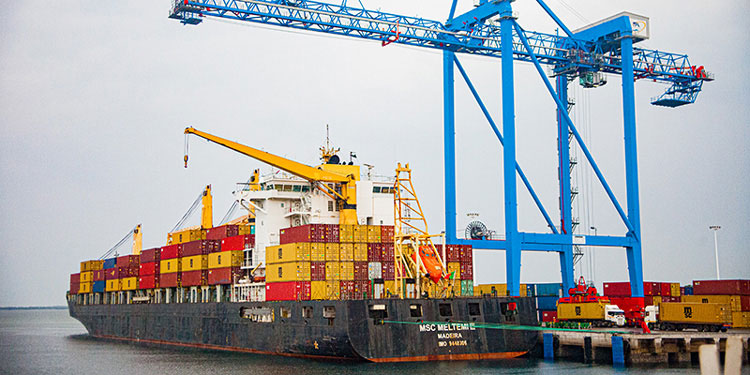
Dry Ports Deal Set to Turbocharge DRC Cargo Flow via Dar es Salaam

Image Courtesy

Share on FacebookShare on Twitter

Tanzania has reaffirmed its commitment to strengthening regional trade efficiency with the formal handover of land for the development of dry ports that will directly serve the Democratic Republic of Congo (DRC). The move is expected to significantly ease cargo movement through the Port of Dar es Salaam, one of the busiest maritime gateways for Central Africa.

The handover, held on the sidelines of the Central Corridor Inter-State Council of Ministers meeting in Dar es Salaam, saw Tanzania and the DRC allocate a total of 120 hectares—60 hectares in Kasumbalesa and Kasenga in the DRC and 60 hectares in Kwala and Katosho in Tanzania. These sites will host modern dry ports, easing the pressure on the main seaport and improving cargo flow to and from the DRC.

The Port of Dar es Salaam currently handles over 1.5 million tonnes of cargo annually for the DRC, but inefficiencies and logistical bottlenecks—including long clearance times and inland transport delays—have constrained trade. The absence of adequate inland port infrastructure has particularly affected DRC-bound shipments, leading to high demurrage costs and supply chain disruptions.

The development of dry ports is expected to change this narrative by decentralizing services traditionally handled at the main port. With customs operations, warehousing, and cargo clearance services relocated closer to the border and the DRC’s economic zones, businesses will benefit from reduced turnaround times, lower freight costs, and more predictable logistics timelines.

Speaking at the handover ceremony, Tanzania’s Minister of Transport, Prof. Makame Mbarawa, emphasized that the project is designed to “enhance efficiency along the Central Corridor and provide landlocked countries like the DRC with seamless access to international markets.” His counterpart, DRC Transport Minister Jean Pierre Bemba Gombo, said the dry port development marks “a major relief for DRC traders who have long endured delays and congestion.”

The Central Corridor Transit Transport Facilitation Agency praised both governments for their commitment, stating that operationalizing these dry ports will not only ease cargo flow but also boost the region’s competitiveness and deepen economic integration.

While the initiative promises major gains, its success will depend on timely infrastructure investment, reliable rail and road linkages, and harmonized cross-border procedures between Tanzania and the DRC. Nonetheless, the dry port plan offers a crucial step forward in unlocking the full trade potential of the Dar es Salaam–Kasumbalesa route.

This article was published by Githua Kihara, an editorial consultant for FEAFFA’s Freight Logistics Magazine. For any inquiries, please contact us via email at editorial@feaffa.com or freightlogistics@feaffa.com, or reach out to Andrew Onionga directly at onionga@feaffa.com / +254733780240.


Previous Post

Bridging Borders: EAC, IGAD, and World Bank Spearhead Digital Payment Integration

Next Post

South Sudan Border Road Holds Key to Unlocking Corridor Potential

Next Post
South Sudan Border Road Holds Key to Unlocking Corridor Potential

South Sudan Border Road Holds Key to Unlocking Corridor Potential

Freight Logistics Magazine Edition 19 Advert

Recent Posts

  • Professional Training for Freight Forwarders Launched in South Sudan, Strengthening Regional Professional Standards
  • From Mombasa to Dar es Salaam: A Regional Shift in Port Tariff Policy
  • Tough Times Ahead: What the Global Liner Shipping Downturn Means for East African Trade
  • Industry Stakeholders Call for Urgent Action on Empty Container Crisis Threatening Regional Trade Corridors
  • Strengthening AfCFTA Trade: FEAFFA Joins the Inaugural African Private Sector Hearing in Johannesburg

Videos

Advertise With Us

Contact editorial@feaffa.com/ info@feaffa.com or Simply Call 0703 971 679

Freight Logistics Magazine is FEAFFA's quarterly publication that provides readers with information on the key industry trends and issues in East Africa.
All images and videos displayed on this website are subject to the owner's copyright and subject to the applicable laws in countries within EAC. The articles do not necessarily reflect the position of FEAFFA on various topics covered.

Professional Training for Freight Forwarders Launched in South Sudan, Strengthening Regional Professional Standards

From Mombasa to Dar es Salaam: A Regional Shift in Port Tariff Policy

Tough Times Ahead: What the Global Liner Shipping Downturn Means for East African Trade

  • Home
  • Logistics Service Providers
  • Privacy Policy
  • Advertise with Us
  • Contact us

Contact Information

info@feaffa.com
+254 (0)738 150 673
+254 (0)738 165 318
HillCrest Court, Waiyaki Way, Slip Road, Westlands

  • Home
  • Logistics Service Providers
  • Privacy Policy
  • Advertise with Us
  • Contact us

© 2024 FREIGHT LOGISTICS. All rights reserved by FEAFFA.

No Result
View All Result
  • Archive
  • Business Directory
  • Contact us
  • Logistics Service Providers
    • Banks
    • Certified Practitioners
    • Insurance Companies
    • Licensed Agents
  • Magazine
  • Magazine
  • MORE

© 2024 FREIGHT LOGISTICS. All rights reserved by FEAFFA.