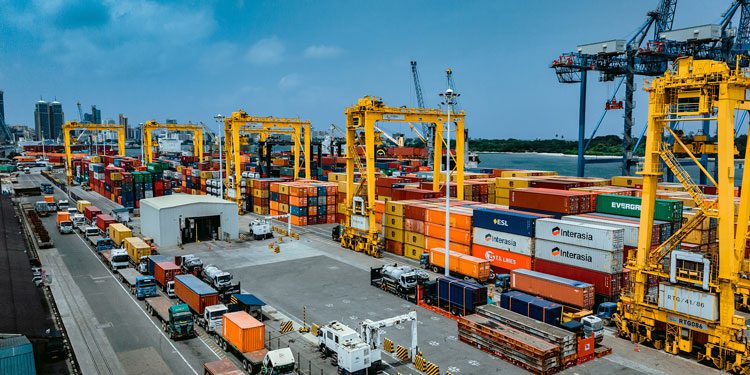
The Tanzania Ports Authority (TPA) has announced the implementation of its Revised Sea-Port Tariff 2026, effective February 2026. While periodic tariff reviews are a standard practice in port management, this latest revision has once again drawn significant attention across the East African logistics sector—particularly among freight forwarders, shippers, regional traders, and other logistics sector stakeholders who depend heavily on Tanzanian ports.
The revised tariff follows a review process conducted throughout 2025. According to TPA, the review was undertaken in accordance with applicable laws and regulations and involved stakeholder consultations coordinated jointly with the Tanzania Shipping Agencies Corporation (TASAC). The approved tariff was published under Government Notice No. 03 of 9 January 2026 and is available on the TPA website.
For the Federation of East African Freight Forwarders Associations (FEAFFA) and its members across the East African Community (EAC), the revision carries considerable weight. Tanzania’s ports, and particularly the Port of Dar es Salaam, serve as critical gateways not only for domestic cargo but also for transit trade destined for landlocked partner states such as Uganda, Rwanda, Burundi, and the Democratic Republic of Congo. Any adjustment in port charges, therefore, has a direct impact on the overall cost of moving goods along the Central Corridor and related regional trade routes.
This development follows a similar move by the Kenya Ports Authority (KPA), which revised its port tariffs in 2025. That adjustment had noticeable effects on port users, including freight forwarders, clearing agents, and shipping lines operating through the Port of Mombasa. Taken together, these changes signal a broader regional trend in which port authorities are reviewing tariff structures to support infrastructure expansion, modernization, and long-term operational sustainability. However, such revisions also introduce renewed cost pressures on logistics service providers and traders.
FEAFFA observes that these tariff adjustments are being introduced at a time when the global shipping and logistics industry is already grappling with tightening margins, fluctuating freight rates, and uncertain market conditions. For freight forwarders in particular, rising port costs are difficult to absorb and are often passed along the supply chain—ultimately affecting traders, businesses, and end consumers across the region.
While FEAFFA welcomes the consultative approach undertaken by both TPA and KPA, the Federation underscores the importance of sustained dialogue, transparency, and predictability in the implementation of revised tariffs. FEAFFA Executive Director, Mr. Elias Baluku, emphasizes that tariff adjustments must be matched by measurable improvements in performance:
“Port tariff increases should go hand in hand with clear improvements in efficiency, service delivery, reduced cargo dwell times, and enhanced digital systems across EAC ports.”
As tariff reviews become more frequent across the region, FEAFFA will continue engaging with port authorities, regulators, and its member associations to ensure that the interests of freight forwarders and regional trade stakeholders are effectively represented. The Federation maintains that port reforms should strengthen—rather than constrain—the competitiveness and efficiency of East Africa’s trade corridors.
FEAFFA is the regional apex body representing the interests of customs clearing and forwarding agents across East Africa. Its membership comprises national associations of clearing and forwarding firms, including the Tanzania Freight Forwarders Association (TAFFA), Kenya International Freight and Warehousing Association (KIFWA), Rwanda Freight Forwarders Association (RWAFFA), Zanzibar Freight Forwarders Bureau (ZFB), Association Burundaise des Agences en Douane et Transitaires (ABADT), South Sudan Freight Forwarders Association (SSFFA), and the Uganda Freight Forwarders Association (UFFA).
The writer, Andrew Onionga, is the Communications and Advocacy Officer at the Federation of East African Freight Forwarders Associations (FEAFFA) secretariat and can be reached at oniongaam@gmail.com