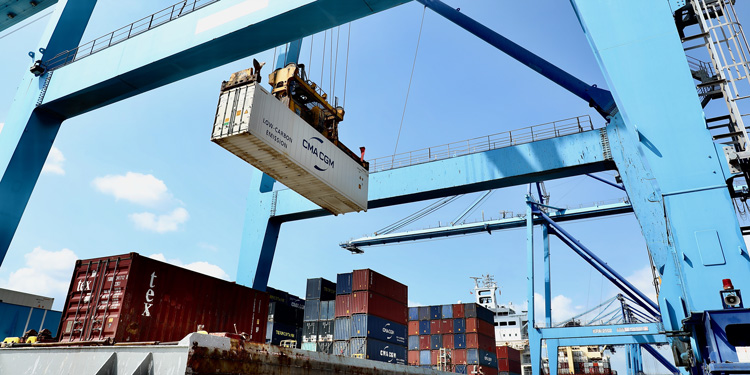
The prolonged empty container evacuation crisis at the Ports of Mombasa has escalated into a major regional logistics challenge, prompting industry stakeholders to call for urgent regulatory intervention to protect cargo owners, freight forwarders, and the wider East African supply chain.
In a joint statement addressed to the Kenya Maritime Authority (KMA) and relevant authorities in Tanzania, leading industry bodies in Kenya—including the Kenya International Freight and Warehousing Association (KIFWA), the Kenya Association of Manufacturers (KAM), the Shippers Council of Eastern Africa (SCEA), and the Kenya Transporters Association (KTA)—warned that the situation has reached unsustainable levels and now threatens trade flows across both the Northern and Central Corridors.
The associations noted that in Mombasa, despite earlier engagements and guidance, empty container depots remain severely congested. Receiving windows are limited. Booking systems are unreliable. Rejections are frequent. As a result, returning empty containers within the free period has become practically impossible. Yet detention and demurrage charges continue to accrue, even though operational control lies entirely with shipping lines and depot operators.
In Dar es Salaam, the situation is similarly deteriorating. Cargo volumes have risen sharply, and evacuation of containers from the port terminal to ICDs now takes between 10 and 14 days. This has caused serious delays in clearance and in the return of empty containers. The rate of demurrage charges has significantly increased to about USD 60–70 per day, further increasing the cost of doing business along the Central Corridor.
Since September 2025, an estimated 167,000 TEUs have been due for return to empty container depots in Mombasa alone. Trucks now take an average of five days to complete a single return cycle at a cost of about USD 100 per day. The industry estimates losses of over USD 16 million in truck detention alone, in addition to more than USD 1 million in container detention charges. Similar cost pressures are now emerging in Dar es Salaam as congestion worsens.
The cost is being felt across the entire regional logistics chain. Clearing agents are spending more time on repeated bookings, validations, and disputes. Transporters are losing revenue due to idle time, failed trips, fuel wastage, and truck congestion. Manufacturers and cargo owners are being forced to pay disputed charges just to unlock cargo, tying up working capital and disrupting production schedules. Consumers are ultimately paying the price through higher retail costs and reduced availability of goods.
Key industry players warn that the continued application of detention and demurrage under these conditions is unfair and commercially unjustifiable. Clearing agents act only as agents. Transporters are service providers. Neither controls container depots nor return policies. Yet both are being made to carry the financial burden of systems they do not control.
The associations argue that the crisis is no longer a port management issue. It is now a systemic threat to regional trade efficiency, corridor performance, and the credibility of East Africa’s logistics gateways.
They have therefore called on regulators in both Kenya and Tanzania to immediately direct shipping lines to suspend further detention and demurrage billing during the crisis, waive charges already incurred since the onset of the problem, stop the practice of withholding delivery orders over disputed charges, issue clear and uniform operational instructions, and support emergency measures to restore fluidity in container evacuation.
In the case of Dar es Salaam, stakeholders have also urged the regulator to consider counting demurrage only after containers are delivered to ICDs, given the long delays in evacuating cargo from the port terminal.
The current industry position follows earlier attempts to resolve the matter through dialogue. At the onset of the crisis in Kenya, KIFWA formally wrote to the Kenya Ships Agents’ Association (KSAA), urging urgent intervention. In that letter, KIFWA accused shipping lines of contravening fundamental principles of contractual obligations under commercial law by continuing to levy charges under conditions where container returns were operationally impossible. KIFWA called for the immediate suspension of detention and demurrage, clear communication on return protocols, temporary alternative return solutions, and urgent stakeholder dialogue. The situation, however, has persisted.
The Federation of East African Freight Forwarders Associations (FEAFFA) has also weighed in, warning of wider regional consequences if the crises at the Ports of Mombasa and Dar es Salaam are not urgently addressed.
“This crisis risks reversing the hard-won efficiency gains along the Northern and Central Corridors,” said FEAFFA President, Mr. Charles Mwebembezi. “Shipping lines must act in line with Standard Trading Conditions and Incoterms. They must provide practical alternatives for empty container returns instead of shifting the burden to agents, transporters, and cargo owners.”
He added that unless urgent corrective measures are taken, the crisis will continue to weaken confidence in the region’s trade corridors and undermine the competitiveness of East Africa as a trading and investment destination.
The writer, Andrew Onionga, is the Communications and Advocacy Officer at the Federation of East African Freight Forwarders Associations (FEAFFA) secretariat and can be reached at oniongaam@gmail.com