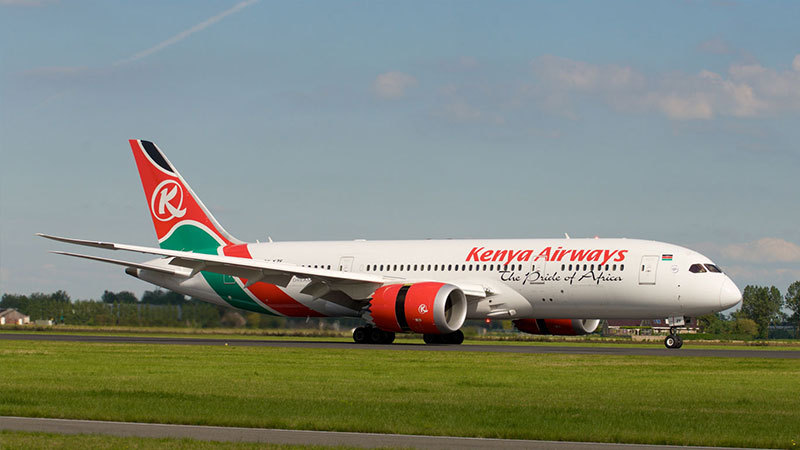
Kenya Airways Cargo has started direct freighter service from Johannesburg hub to Maputo, Harare, Lilongwe, Lusaka, and Dar-es-Salaam.
The first flight departed from Johannesburg to Lusaka and Lilongwe last week.
Previously, all traffic departing from Johannesburg had to pass through its Nairobi hub. With this new development, cargo from Africa’s largest manufacturing economy will now fly directly to these markets.
In September this year, KQ announced plans to enhance its cargo operations to 20 percent of its business to bolster the recovery process in the wake of diminishing demand for passenger travel.
At the time, cargo contributed a paltry 10 percent of the airline’s income with passengers contributing the remaining 90 percent.
Cargo remains the most promising business for airlines across the world following the resumption of passenger services, which have remained low.
“About 90 percent of our business now is passenger but we now want to diversify that by moving more into cargo, my own desire is to move it from the current seven or 10 percent of the business to more than 20 percent,” said Kenya Airways chief executive officer Allan Kilavuka in an interview with CNN MarketPlace Africa.
The airline’s quest to haul more cargo has been curtailed by lack of high capacity long range freighters to evacuate huge volumes of freight to Europe.
In the long run, the airline said it needs to acquire high capacity B777 for its long haul trips. KQ has argued before that the use of passenger aircraft for cargo is not economically viable.
The cost of using a passenger aircraft is higher than a freighter because of too much wasted space as the cargoes are placed on the seats. By using passenger aircraft, the airline is only able to evacuate 40 tonnes of cargo on a one leg trip
Freighters normally carry about 100 tonnes, with economies of scale making it viable for long haul cargo business.
Freighter aircraft will become ever more necessary to compete effectively in air cargo markets, where airlines operating them attract nearly 90 per cent of the industry’s revenue, predicts Boeing- the US plane-maker’s latest biennial World Air Cargo Forecast report.
The airfreight traffic will grow by four per cent each year over the next two decades and, consequently, the global freighter fleet is expected to grow by more than 60 per cent.
Its latest report indicates there will be a demand for 2,430 freighter units in the period, including 930 new production models and 1,500 converted from passenger aircraft. The urgent transportation of life-saving medical supplies and soaring e-commerce shipments will fuel this upwards trajectory in global airfreight, says Boeing.
Boeing’s summaries also show that, during the Coronavirus pandemic, as more businesses shifted to online selling platforms, e-commerce sales – which were already growing at double-digit rates – have now further accelerated into the air cargo market.
‘Year-to-date through September, express carriers increased their traffic by 14 per cent,” the report notes.
The International Air Transport Association (IATA) estimates that, in December 2019, e-commerce represented up to 15 per cent of air cargo volumes. This number is continuously growing, and the trend has accelerated during and after the COVID-19 pandemic.
By 2040, around 95 per cent of all purchases are expected to be via e-commerce, according to research conducted by NASDAQ. With China currently the largest e-commerce market in the world, the fastest growth in the online retail sector between 2018 and 2022 is expected to come from India and Indonesia.
Darren Hulst, vice-president of commercial marketing at Boeing, observes that, in 2020, freighter operators have been in a unique position to meet market requirements for “speed, reliability and security, transporting medical supplies and other goods for people and communities around the world.”
In response to the global travel bans that decimated passenger belly-hold cargo capacity, which accounted for about half of the world airfreight in 2019, freighter operators operated above “normal utilisation levels, and traffic for all-cargo carriers grew by six per cent,” the aircraft manufacturer points out.