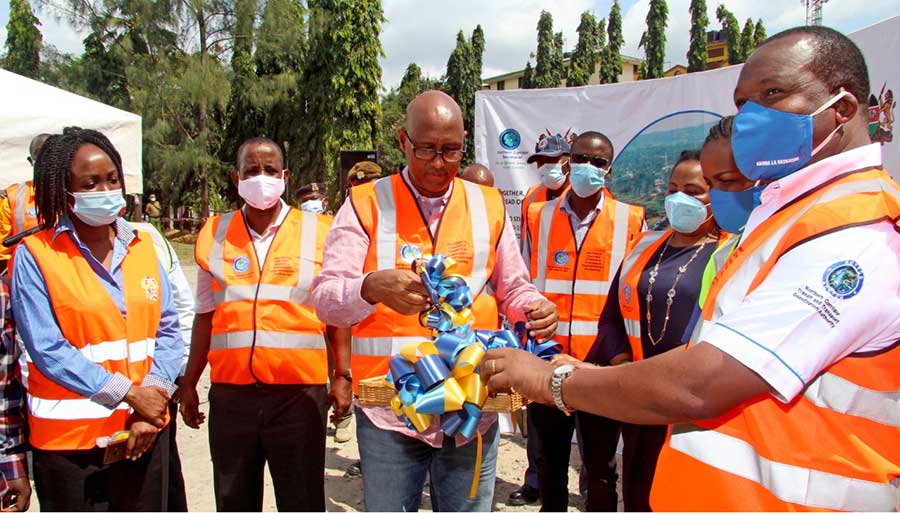
Resilience of the regional institutions and structures that have been put in place over the years to enhance efficiency and seamless flow of cargo along the transport corridors has been put to test when movement of all goods to various destinations became essential in the wake of the COVID-19 pandemic since March 2020.
The Northern Corridor Transit and Transport Coordination Authority (NCTCCA) has played a pivotal role for the last six months of the pandemic as efforts are being made to help players in the industry to circumvent some of the stringent measures on movement of cargo put in place by Member States to contain the spread of COVID-19.
Initially, it was very challenging to maintain optimal flow of goods and services as everyone in the world sought to understand the new disease. However, it never took long to marshal enough support from key industry players to strategize on a new normal that has guided the evolution of a new supply chain.
To address the challenges related to the supply of vital materials needed to fight the COVID-19 pandemic and help regional economies to remain afloat, the Northern Corridor Secretariat was able to put in place a regional platform for virtual meetings to connect all Northern Corridor Stakeholders.
The weekly meeting mainly focused on what was happening in real time in each of the Member States in general and at the transit/transport node along the Corridor – Port, Weighbridges, Border Posts, Inland Container Depots (ICDs) and Transit Parking Yards in particular.
During the COVID-19 pandemic, the Secretariat also managed to carry out all its planned Technical and Policy Organs Meetings. The 32nd Meeting of the Northern Corridor Council of Ministers and the 49th Meeting of the Executive Committee were all virtually conducted during the pandemic period.
The period also witnessed a joint Specialised Technical Committee meeting and the validation of the 15th Issue of the Northern Corridor Transport Observatory held online. Recently, the Revised Northern Corridor Transit and Transport Agreement was discussed in an extraordinary Executive Committee Meeting virtually held.
“We have leveraged on the IT to run all our activities. This has been a vital lesson that organisations can cost effectively and efficiently carry out online as opposed to some of the activities that previously needed a lot of physical planning,” said Mr. Omae Nyarandi, Executive Secretary NCTTCA; adding that this included very basic things such as creation of a 24/7 WhatsApp Group for quick interventions in the areas of operations including the truck drivers.
The East African Community (EAC), working together with the Northern & Central Corridors is now putting a surveillance tracker to contribute towards dealing with the pandemic. The initiative will provide a platform for the exchange of information in real time about tests taken by drivers and crew and about the transit movements of drivers and trucks. It will also support the tracking and tracing of drivers and their contacts.
As a multimodal surface transport system linking the Great Lakes countries of Burundi, DR. Congo, Rwanda, South Sudan and Uganda to the Kenya’s seaport of Mombasa, the Northern Corridor has played crucial role over the years in the entire region.
Established in 1985 through a treaty known as the Northern Corridor Transit and Transport Agreement (NCTTA), the institution has focused on road, rail, pipeline and inland waterways transport. The Corridor also serves Northern Tanzania, Somalia and Ethiopia.
At the apex of the institution is a Council of Ministers, comprising Ministers responsible for transportation in Member States- the top most policy organ. Following in the rank is the Executive Committee, an inter-governmental Committee composed of Permanent Secretaries or their equivalents also responsible for transport matters in each of the contracting states. The Executive Committee is primarily responsible for initiating general principles and policies governing the Authority.
Programmes of the Northern Corridor institution are often implemented through Specialised Committees; including the Northern Corridor Public-Private Stakeholders Forum; Committee on Infrastructure Development and Management; Committee on Transport Policy and Planning; Committee on Customs and Transit Facilitation and the Private Sector Investment Promotion Committee. The Specialised Committees help the Authority to facilitate trade, movement of persons, vehicles and goods in domestic, regional and international transport as mandated by the 2007 Agreement. In addition, the roles of the Committees include stimulation of economic and social development in the territories of the contracting parties; transforming the Corridor into a Development Corridor, in addition to offering safe, fast and competitive transport and transit services that secure regional trade, stimulate investments, encourage sustainable development and poverty reduction.
“The Northern Corridor Secretariat helps to implement strategies for accelerating economic and social growth along the Corridor while ensuring environmental sustainability,” Mr Nyarandi said.
The activities of the Authority are made possible through the support from the Member States. A mutual understanding exist among the Member States to implement a non-discriminatory policy, reciprocity, equal treatment and fair competition towards operators and users of the transport and communication systems; Cooperation in investment, planning, development of transport and transit facilities and jointly seeking financing for project execution. Member States have also played roles of harmonising their standards and procedures for design, construction, operation and maintenance of transport, transit facilities and equipment and take measures necessary to promote the role of the Corridor as a development Corridor.
The Northern Corridor Secretariat is playing a significant role in interfacing of Customs Systems and joint verification of multiple Customs documents, reduction of non-tariff barriers- roadblocks and introduction of High Speed- Weigh-In-Motion Systems to reduce multiple weighbridges along the Corridor, which have reduced delays at weighbridges.
The Authority has been key in advocating for the decongestion of Mombasa Port by streamlining and automating the procedures and operations, domestication of some regional policies such as the implementation and effective monitoring of EAC Vehicle Load Control (VLC) and some COMESA Trade Facilitation Instruments.
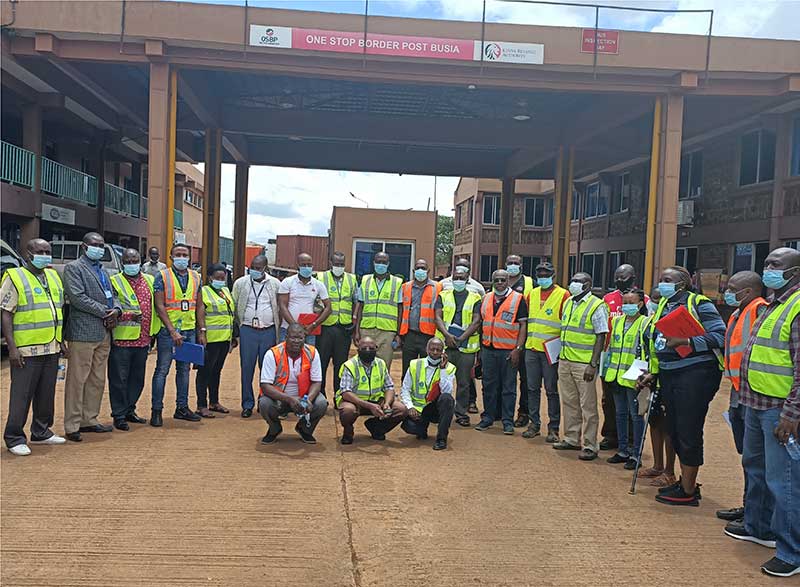
The Northern Corridor has consistently championed for Public-Private Partnerships in Member States to stimulate investment and encourage development. The Secretariat has advocated for the rehabilitation of major highways to ensure road quality according to the International Roughness Index (IRI). Adequate border infrastructure such as One Stop Border Posts and related facilities to minimize Customs procedures and transit times has also been a key area of focus.
“We are glad to report that various studies conducted by the Northern Corridor Secretariat have provided Member States with ample tools for improved planning and decision making on issues related to transport and trade facilitation,” Nyarandi added.
What has perhaps put the Northern Corridor Secretariat at the centre stage is the Effective Monitoring System through the Northern Corridor Transport Observatory and the Dashboard, which gives weekly, monthly, quarterly, bi-annual and annual reports.
The Observatory is a monitoring tool that measures more than 45 indicators which tracks the performance of the port of Mombasa as well as the performance of the corridor. Through the Observatory, the Secretariat is able to monitor the implementation of the Mombasa Port and Northern Corridor Community Charter.
The key successful project that have revolutionised the efficiency and performance of the corridor include creation of Single Customs Declaration Document and Single Customs Territory (SCT). The Secretariat is also implementing a Sustainable Green Freight Transport Programme along the Northern Corridor, which aims at reducing pollution at the Port of Mombasa and along the Northern Corridor road networks.
The Northern Corridor Secretariat has also played a significant role in the establishment of the Roadside Stations Programme along the Northern Corridor and the Regional Electronic Cargo Tracking System.
Many Agencies contribute to the funding of the Northern Corridor Transit and Transport Coordination Authority. Some of the Agencies include but are not limited to, TradeMark East Africa (TMEA), the World Bank’s Africa Transport Policy Programme (SSATP/WB), UN Environment Programme (UNEP), United Nations Conference on Trade and Development (UNCTAD) and United Nations Economic Commission for Africa (UNECA).
Other partner institutions are East Africa Community (EAC), COMESA, Economic Community of the Great Lakes Countries (CEPGL), the United Nations Office of the High Representative for the Least Developed Countries, Landlocked Developing Countries and Small Island Developing States (UN-OHRLLS) and African Development Bank (AFDB).