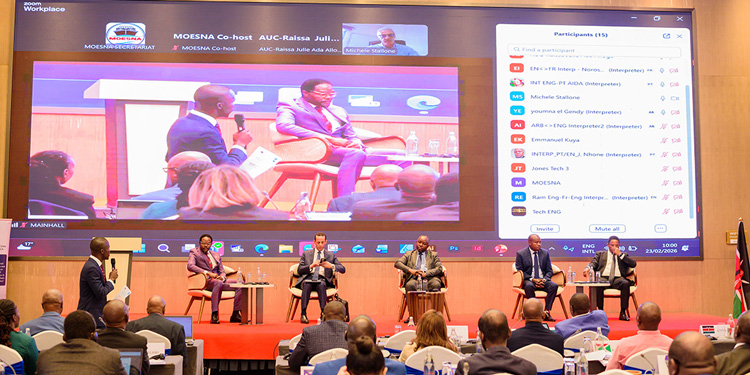
Industry stakeholders from more than 23 African countries validated a feasibility study for the establishment of regional shipping line(s) and a regional maritime cabotage protocol developed by the Maritime Organization for Eastern, Southern, and Northern Africa (MOESNA) during a workshop held in Nairobi. The initiative aims to strengthen Africa’s control over its maritime transport systems and accelerate intra-African trade.
The workshop was officially opened by Eng. Fredrick Mwalusaka, principal secretary of the Ministry of Transport and Logistics of the Republic of Zambia, who is also the chair of the MOESNA Coordination Committee.
While giving his remarks, Mr. Julius Segera, Director of Shipping and Maritime, speaking on behalf of Aden Abdi Millah, Principal Secretary in Kenya’s State Department for Shipping and Maritime Affairs, highlighted the strategic role of the Port of Mombasa as a gateway for both coastal and land-linked countries.
“A robust regional shipping network is essential to unlock value from the blue economy, build local capacity and enhance economic resilience,” he said.
The feasibility study finds that establishing ESNA Regional Shipping Line(s) is both commercially viable and strategically important. For decades, African countries have relied heavily on foreign carriers, contributing to high freight costs, volatile rates, weak connectivity between African ports, and limited regional control over maritime value chains.
Maritime transport carries nearly 90 percent of global trade by volume. With growing cargo flows including containerized goods, agricultural exports, manufactured products, pharmaceuticals, consumer goods, and minerals, the region has a strong cargo base capable of supporting competitive regional shipping services.
The proposed model recommends a public-private partnership structure to reduce public financial exposure while ensuring operational efficiency. It is supported by a Regional Maritime Cabotage Protocol designed to harmonize maritime policies across participating countries, with each country expected to establish a National Transport Committee to work with MOESNA during implementation.
The initiative aligns with key regional and continental frameworks, including the African Union’s Revised African Maritime Transport Charter (AMTC 2010), the Regional Maritime Transport Policy adopted in 2024, and the directive issued by the First Assembly of Regional Ministers of the ESNA Region Responsible for Maritime Affairs in 2022. It also supports the implementation of the African Continental Free Trade Area by strengthening maritime connectivity across eastern, southern, and northern Africa.
Stakeholders endorsed the study’s recommendations on business models, route networks, financing strategies, and institutional arrangements. The cabotage framework will cover both coastal shipping and inland waterways, recognizing the growing importance of lake and river transport in supporting regional trade corridors.
Implementation will follow a phased roadmap from 2026 to 2033. The first phase will focus on legal and institutional readiness, the second phase on commercial deployment of regional shipping services, and the final phase on strengthening regional coordination and sustainability.
Amb. Dr. Mohamed Kadah, assistant secretary general for programs at COMESA, noted that maritime transport remains central to regional competitiveness.
“The proposed regional shipping initiative is intended to enhance service reliability, reduce logistics costs, mobilize private capital, and strengthen indigenous participation rather than recreate legacy national carriers,” he said.
Participants acknowledged key challenges, including low levels of intra-African trade, limited maritime technical capacity, infrastructure gaps along major transport corridors, and the capital-intensive nature of ship ownership. Despite these challenges, there was a broad consensus that strengthening Africa’s maritime self-reliance is long overdue.
MOESNA Secretary General Kassim Kaziba Mpaata observed that despite Africa’s extensive coastlines and port infrastructure, the region remains heavily dependent on foreign-owned shipping lines, leading to externally determined freight rates, weak intra-regional connectivity, and limited indigenous fleet development.
“These challenges are compounded by fragmented and inconsistent national cabotage regimes, weak regulatory harmonization, and uneven enforcement capacity, which discourage investment and undermine the development of a sustainable maritime workforce,” he added.
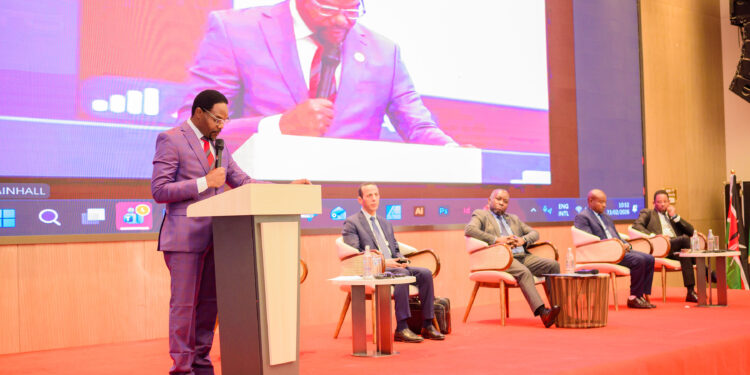
Freight forwarders, on the other hand, coordinate cargo flows between shippers, shipping lines, ports, customs authorities, and inland transport providers. More predictable shipping services and improved connectivity would enhance planning, strengthen service delivery, and improve competitiveness. A predictable and regionally coordinated shipping system will directly improve the efficiency of freight forwarders and the competitiveness of African trade.
Mr. Edward Urio, president of the Tanzania Freight Forwarders Association (TAFFA), vice president of FEAFFA, and vice president of the International Federation of Freight Forwarders Associations (FIATA), emphasised the importance of structured private sector participation.
“From a freight forwarder’s perspective, the initiative could significantly improve logistics performance. The Federation of East African Freight Forwarders Associations (FEAFFA) views the ESNA Regional Shipping Lines framework as an opportunity to improve schedule reliability, strengthen port-to-port connectivity, and stabilize freight rates across the region,” he said.

For land-linked countries in the ESNA region, improved maritime coordination could reduce logistics costs, shorten transit times, and strengthen supply chain resilience while reducing reliance on transshipment hubs outside the continent.
FEAFFA, therefore, called for formal inclusion of freight forwarders in the governance structures supporting implementation. Their operational insights into cargo flows, documentation challenges, and corridor bottlenecks can help ensure the framework remains practical and commercially responsive.
The Nairobi validation workshop brought together representatives from ministries responsible for shipping and trade, national port authorities, maritime administrations, customs authorities, shippers’ councils, freight forwarders, local shipping lines, and maritime experts. Regional and continental organizations represented included the African Union Commission, COMESA, the AfCFTA Secretariat, the Northern Corridor Transit and Transport Coordination Authority, the Ports Management Association of Eastern and Southern Africa, the Lake Victoria Fisheries Organization, and the Maritime Business Chamber.

If implemented effectively, the ESNA Regional Shipping Lines and Cabotage Framework could significantly strengthen regional maritime connectivity, reduce logistics costs, and expand African participation in maritime trade.
The writer, Andrew Onionga, is the Communications and Advocacy Officer at the Federation of East African Freight Forwarders Associations (FEAFFA) secretariat and can be reached at oniongaam@gmail.com