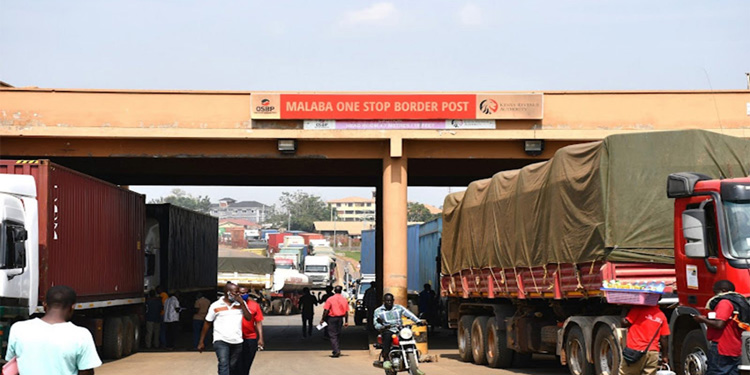
Freight forwarders under the auspices of the Federation of East African Freight Forwarders Associations (FEAFFA) have welcomed recent measures by the Government of Kenya to address long-standing Non-Tariff Barriers (NTBs) affecting trade along the Northern Corridor. These barriers have increased significantly over time and continue to contribute to delays, high transport costs, and inefficiencies along the key route linking the Port of Mombasa to countries in East and Central Africa.
Non-tariff barriers refer to administrative, procedural, or regulatory obstacles that hinder the smooth movement of goods across borders. Along the Northern Corridor, these include excessive roadblocks, multiple inspections, delays at weighbridges, and inconsistent enforcement of regulations.
The East African Community (EAC) Affairs Principal Secretary for Kenya, Caroline Karugu, recently called for the removal of over 22 illegal roadblocks along the corridor. The Northern Corridor is a critical multi-modal transport network serving Kenya, Uganda, Rwanda, Burundi, South Sudan, and the Democratic Republic of Congo.
From a regional perspective, inefficiencies such as multiple roadblocks affect the overall performance of transport corridors and increase the cost of doing business. While cargo flows may shift between routes, FEAFFA emphasizes that the focus should not be on competition between corridors but on improving efficiency, reliability, and seamless movement of goods across all regional trade routes, including both the Northern and Central Corridors.
In response, the State Department for EAC Affairs, in collaboration with key national agencies including the Kenya Revenue Authority (KRA), Kenya Ports Authority (KPA), and the National Police Service of Kenya, has agreed to reduce the number of roadblocks from the current 22 to 27 to five gazetted stops.
This intervention is long overdue and is expected to significantly improve transit efficiency. Travel time between Mombasa and the Malaba border is projected to reduce from the current 76 to 80 hours to an average of 36 to 48 hours. This will lower transport costs, improve predictability, and enhance service delivery for corridor users.
FEAFFA notes that addressing non-tariff barriers requires a coordinated approach. The success of such interventions will depend on the active involvement of all stakeholders, including government agencies, enforcement authorities, private sector players, and corridor users.
Commenting on the development, the FEAFFA President, Mr. Charles Mwebembezi welcomed the move and reiterated the importance of efficiency for all corridor users.
“As users of the corridors, whether Northern or Central, what we want to see is efficiency that ensures reduced cost of moving cargo from the ports to their destination,” he said.
The Northern Corridor remains a vital trade route for the region. However, FEAFFA underscores that strengthening all regional corridors and ports is key to building a more resilient, competitive, and integrated logistics system in East and Central Africa.
“FEAFFA will continue to engage with governments, corridor authorities, and regional stakeholders to support initiatives that improve efficiency, reduce trade barriers, and promote seamless movement of goods across the region,” concluded Mr. Mwebembezi.
The writer, Andrew Onionga, is the Communications and Advocacy Officer at the Federation of East African Freight Forwarders Associations (FEAFFA) secretariat and can be reached at oniongaam@gmail.com