Smart Freight Week 2026, held in Amsterdam, provided a timely reflection of where the global logistics sector stands in its transition toward sustainability. Co-organized by the Smart Freight Centre (SFC) and the Kuehne Climate Centre (KCC), the event brought together logistics and sustainability professionals to share practical solutions for reducing emissions, standardizing emissions calculation, and scaling clean freight technologies such as electric trucking.
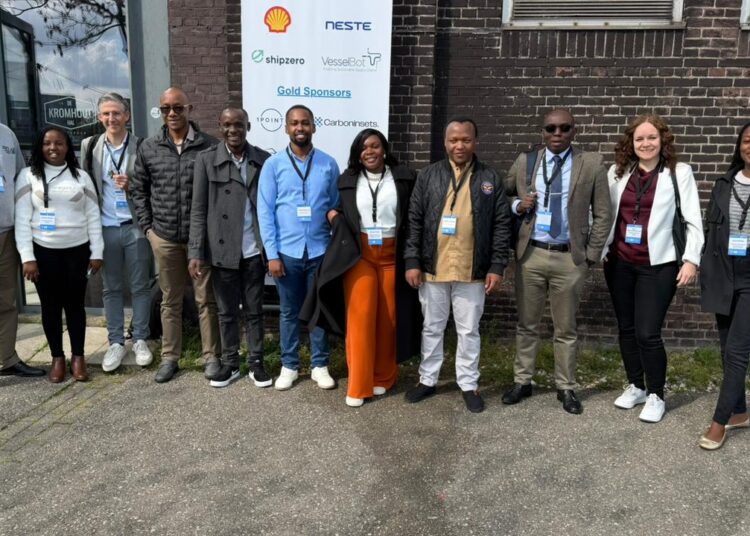
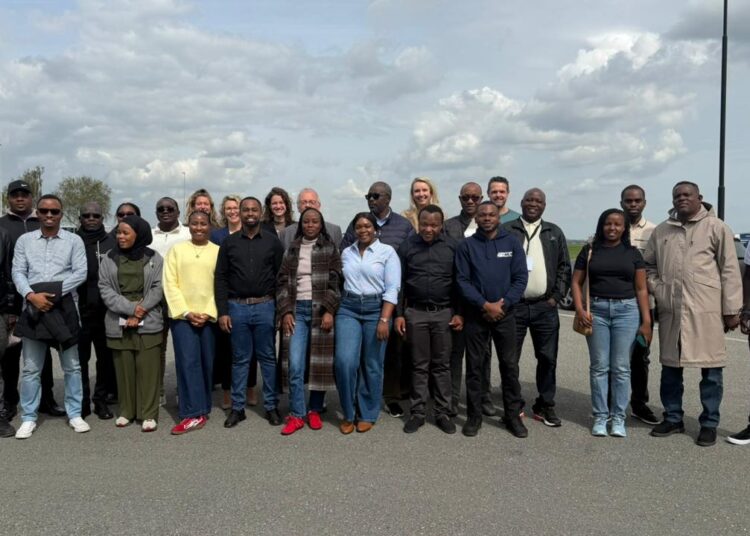
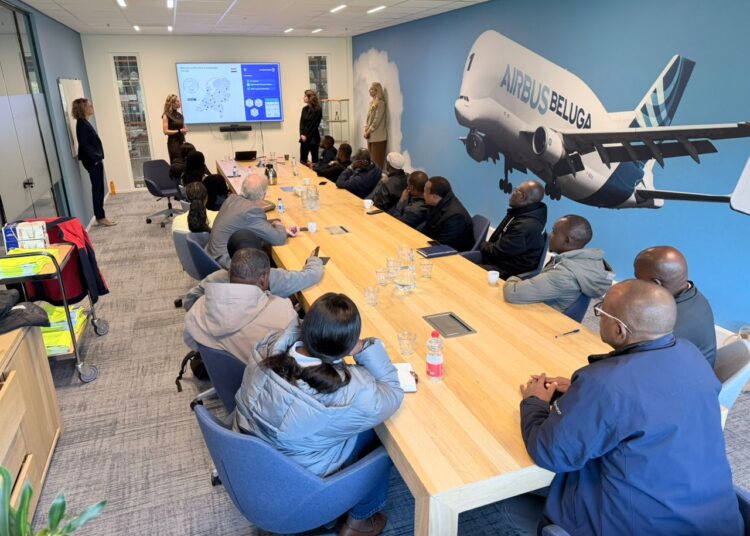
The Federation of East African Freight Forwarders Associations (FEAFFA) participated in the annual Green Freight Study Tour, facilitated by KCC and the Deutsche Gesellschaft für Internationale Zusammenarbeit GmbH (GIZ Kenya). The program combined the main conference from 14th to 16th April 2026 at De Kromhouthal in Amsterdam with thematic site visits on 13th and 17th April, offering direct exposure to real-world applications of sustainable logistics.
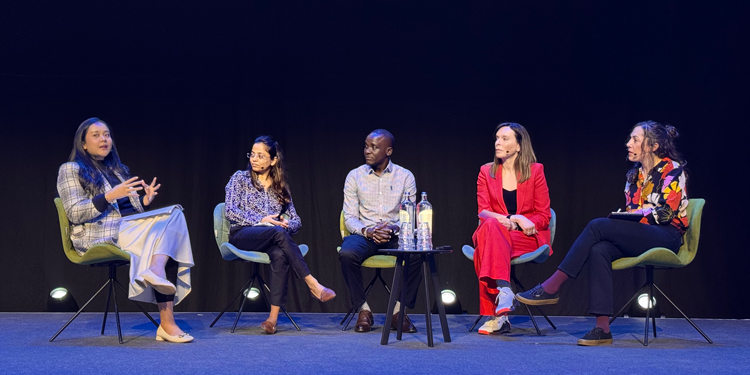
During the event, FEAFFA took part in a plenary panel discussion themed “Enabling Global Access to Education in Decarbonization.” The session emphasized the growing importance of education and skills development in enabling the transition to green freight, an issue that strongly resonates with the East African region.
The study tour provided practical insights across different segments of the logistics chain. At the Port of Amsterdam, the electric truck charging plaza demonstrated how infrastructure can accelerate adoption, with subsidized charging averaging 0.50 euros per kilowatt hour supporting trucks, construction equipment, and smaller vehicles. Demand for fast charging is already increasing, signalling a shift toward large-scale electrification.

Urban logistics solutions were equally instructive. Facilities such as CTPark showed how well-located and efficiently designed hubs can support near zero emission distribution within cities. At the same site, operations such as those of Heineken illustrated how electric trucks are already being deployed for urban deliveries while maintaining operational efficiency.
Policy and regulation are also playing a decisive role. Cities such as Amsterdam have introduced multiple zero-emission zones that restrict polluting delivery vans and trucks, with enforcement supported by automated camera systems linked to license plates. These measures are aligned with broader national and European targets to achieve zero-emission transport, demonstrating how policy, infrastructure, and private sector action can work together.
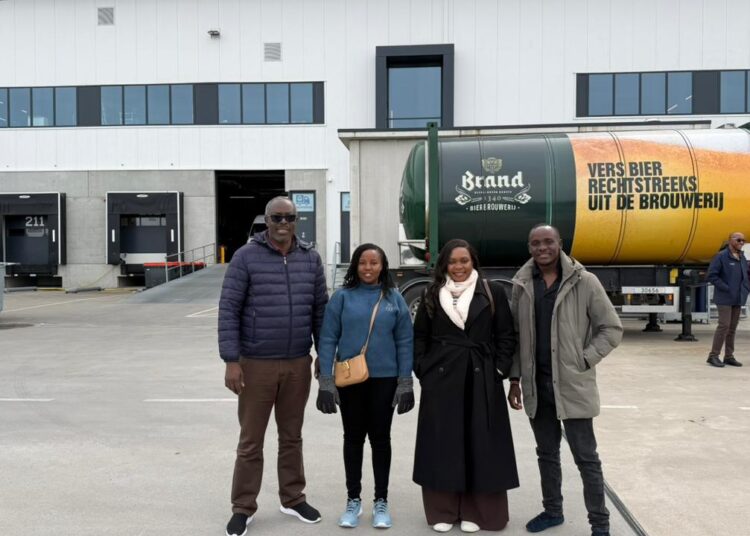
The visit to the perishables logistics hub operated by Kuehne + Nagel highlighted another critical dimension, the role of sustainable cold chain systems. The facility relies on advanced temperature-controlled infrastructure and requires data sharing across partners to support emissions tracking, including Scope 3 emissions. This is particularly relevant for East Africa, where strengthening cold chain systems is key to reducing post harvest losses in sectors such as horticulture and fisheries.
A broader lesson from Smart Freight Week 2026 is that the global sector has moved beyond awareness and into implementation and scaling. Electrification of freight is expanding, including in port operations such as drayage, while new business models such as shared charging infrastructure and energy self-generation at logistics depots are emerging to reduce costs and improve access. Battery costs are gradually declining, improving the viability of electric trucks, although challenges such as the lack of standardization in battery swapping and pressure on electricity grids remain. There is also growing interest in alternative energy solutions such as hydrogen for logistics and industrial use.
For East Africa, these insights are highly relevant but must be adapted to a regional context where logistics remain largely road-based, accounting for between 85 and 90 percent of freight movement, and are dominated by SMEs operating under cost and infrastructure constraints. While awareness of green freight has increased significantly, many operators still face challenges related to high costs, limited technical capacity, and the lack of tools for emissions measurement and data-driven decision-making. There is also a persistent gap in translating the business case for green logistics into simple and practical models that SMEs can apply.
It is within this context that partnerships have become central to FEAFFA’s efforts to drive decarbonization across the East African Community region.
The Kuehne Climate Centre has played a leading role in institutionalizing green freight within the region. It launched the Green Freight Programme in East Africa during the Global Logistics Convention 2024 in Tanzania, setting the foundation for more structured regional action. Building on this, KCC has supported the development of a standardized short course on Green Freight and Sustainability under FEAFFA’s Continuous Professional Development programme, which is set for rollout this year. KCC has also consistently collaborated with FEAFFA through participation in regional forums, including Global Logistics Conventions, contributing to knowledge exchange and policy dialogue on decarbonizing logistics.
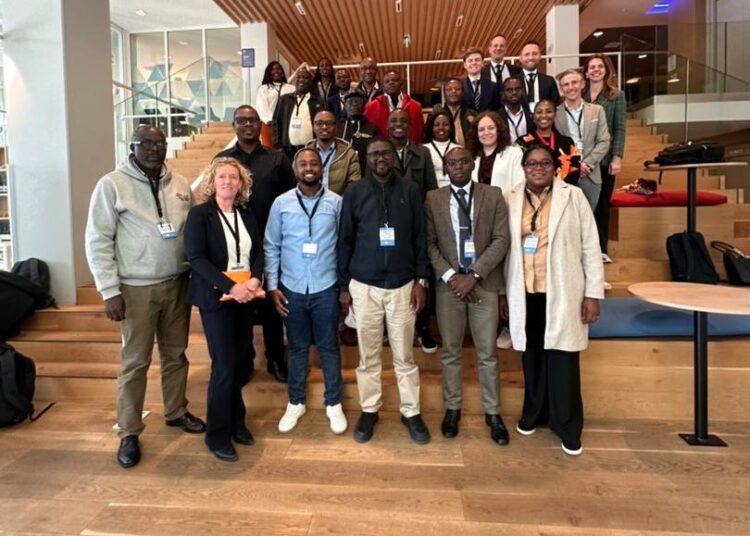
The Smart Freight Centre has provided critical technical support and global alignment. Since 2024, FEAFFA has participated in Smart Freight Week, ensuring continued exposure to international best practices and evolving standards. SFC also supported a number of emissions accounting trainings conducted by FEAFFA in Kenya and Tanzania in 2025, addressing a key gap in the region around emissions measurement and reporting. In addition, SFC has contributed to FEAFFA platforms such as the Global Logistics Convention. Looking ahead, a proposed tripartite initiative between SFC, the Strathmore Energy Research Centre, and FEAFFA on scaling electric truck development in East Africa is expected to support practical implementation, with FEAFFA leading stakeholder mobilization across the logistics industry.
In 2024, the Deutsche Gesellschaft für Internationale Zusammenarbeit supported FEAFFA to conduct a regional analytical study on the uptake of green logistics among customs agents and freight forwarders, providing insights into key barriers and opportunities. GIZ Kenya has also supported training programmes on sustainable solutions for trade and transport, helping industry stakeholders begin applying green logistics practices. Its sponsorship and participation in the Global Logistics Convention in Tanzania in 2024 and Burundi in 2025 has further helped sustain regional momentum.
Encouragingly, regional coordination is also gaining momentum. The Northern Corridor Transit and Transport Coordination Authority (NCTTCA) and the Central Corridor Transit Transport Facilitation Agency (CCTTFA) are advancing green freight initiatives, including plans for corridor electrification. The signing of a Memorandum of Understanding between the two corridor authorities marks an important step toward harmonizing approaches, aligning standards, and strengthening cooperation. This is particularly significant in ensuring that green freight initiatives are implemented consistently across the region, rather than in fragmented silos. Development partners are also supporting pilot projects, including electric truck trials along key corridors, while there is growing interest in local assembly of electric vehicles and battery manufacturing within Africa.
At this point, the FEAFFA executive director reflected on the significance of the global exposure and regional partnerships. “Smart Freight Week continues to remind us that the transition to sustainable logistics is already happening. For East Africa, the focus now must be on practical implementation, building capacity within our membership, and ensuring that SMEs are not left behind in this transition,” he said.
At the same time, market expectations are evolving. Shippers are increasingly requiring emissions data as part of procurement processes, making sustainability a competitive factor rather than a voluntary effort. This places additional pressure on freight forwarders, particularly SMEs, to adopt emissions tracking and reporting practices, even as they face capacity and cost constraints.
Smart Freight Week 2026 ultimately underscored that the transition to sustainable logistics is accelerating globally. For East Africa, the pathway forward lies not only in adopting these solutions but also in building the capacity, systems, and partnerships required to make them work within the regional context.
Through sustained collaboration with partners such as SFC, KCC, and GIZ, FEAFFA is playing a critical convening role by bridging global knowledge with regional implementation, supporting its members, and helping shape a coordinated East African Community approach to green freight. These partnerships are not only enabling participation in global platforms but are also actively driving the practical steps needed to decarbonize logistics in East Africa.
The writer, Andrew Onionga, is the Communications and Advocacy Officer at the Federation of East African Freight Forwarders Associations (FEAFFA) secretariat and can be reached at oniongaam@gmail.com.