Efforts to strengthen capacity in green logistics and sustainable trade facilitation are gaining momentum in East Africa, with industry associations, customs authorities, and development partners investing in the knowledge and skills needed to support more sustainable freight operations.
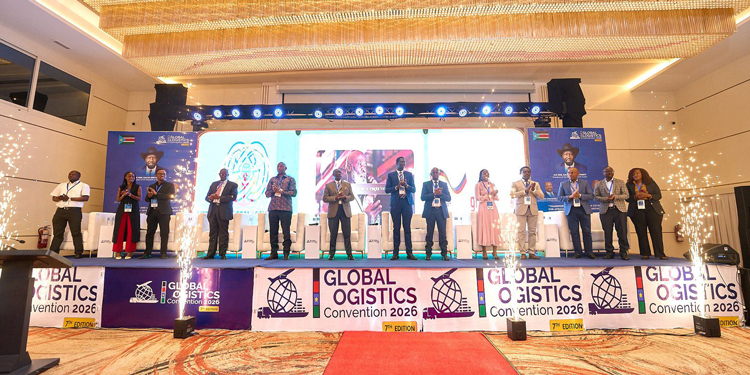
Against this background, the Federation of East African Freight Forwarders Associations (FEAFFA) has officially launched its Regional Short Course on Green Freight and Sustainability, marking an important step in its efforts to support freight forwarding and logistics firms across the East African Community (EAC) in integrating environmental sustainability into their operations. The course was officially launched during the 7th Global Logistics Convention (GLC), held at Pyramid Continental Hotel in Juba, South Sudan, from 25 to 27 August 2026.
Green logistics is an emerging area of focus for FEAFFA, which is exploring practical ways to strengthen industry capacity, expand professional training, and support its members in responding to evolving environmental requirements. The new course forms part of the wider Green Freight Support Programme for Eastern Africa, launched in 2024 by the Kühne Climate Center and Smart Freight Center (SFC) during the 5th Global Logistics Convention in Tanzania to support the transition towards more efficient, low-emission freight operations and contribute to reducing the global carbon footprint.
FEAFFA President Charles Mwebembezi said, “Green logistics presents an important opportunity for the East African freight forwarding industry to improve operational efficiency while contributing to global efforts to reduce carbon emissions. FEAFFA is committed to working with partners to ensure freight forwarding businesses access the knowledge and expertise needed to participate in this transition.”
Supported by the Kühne Climate Center, the curriculum was developed and comprises 11 modules covering the foundations of green logistics, emissions accounting and reporting, digitalization, fleet efficiency, alternative fuels and electrification, green warehousing, waste reduction, sustainability leadership, ESG reporting, green procurement, and the financial considerations of sustainability. The course concludes with a practical module on developing organizational green action plans, enabling participants to translate their learning into measures suited to their businesses.
The course targets freight forwarding and logistics professionals, including practitioners and managers seeking to strengthen their understanding of sustainability and apply greener practices within their organizations. It will be delivered modularly through FEAFFA’s Continuous Professional Development (CPD) framework, allowing participants to undertake individual modules relevant to their professional needs and areas of interest.
FEAFFA will work with its National Associations across the region to support implementation, mobilize participants, and ensure the training responds to the needs of local freight forwarding industries. The first cohort, expected to commence in 2027, will also provide an opportunity to test the curriculum in practice, gather feedback, and identify areas for refinement as the programme is rolled out across the region.
FEAFFA Executive Director Elias Baluku noted: “Green logistics is a developing area of focus for the Federation. Through this course and our engagement with partners, we want to support freight forwarders to understand emerging sustainability requirements, identify opportunities to improve efficiency, and take practical steps towards more environmentally responsible operations.”
Programme delivery is expected to begin in early 2027. In preparation, FEAFFA will work towards making the course accessible across its member countries, including translating the learning content into French to support participation in Burundi. These steps will support the establishment of a regional learning pathway that recognizes the linguistic and operational diversity of the EAC freight forwarding industry.
The initiative builds on collaboration with organizations working to advance freight decarbonization and strengthen industry capacity. Smart Freight Centre contributed technical expertise, while the Kühne Climate Center (KCC) provided financial support. KCC is supporting initiatives that build knowledge and practical capabilities for greener logistics. GIZ Kenya is also supporting related green logistics and trade facilitation capacity-building efforts in the region, among others.
Friedel Sehlleier, Project Manager at Kühne Foundation, said, “Building capacity within the logistics sector is essential to translating sustainability ambitions into practical action. Professional training helps ensure that knowledge on green freight reaches the people making operational and business decisions every day.”
Olivia Lamenya, Advisor, Climate and Logistics at Kühne Climate Center, added, “Freight decarbonization requires more than technology. It also requires reliable emissions data, operational improvements, and professionals who understand how to apply available solutions. Building these capabilities within East Africa’s logistics sector is an important step towards more sustainable freight operations.”
The growing emphasis on sustainability is also evident in customs administration. In a recent development in Kenya, the Kenya Revenue Authority (KRA) launched the fourth module of its Green Customs Curriculum, titled Facilitation of the Safe and Efficient Green Module.
Developed with support from the Global Alliance for Trade Facilitation and GIZ Kenya, the curriculum builds on earlier modules focused on the identification, monitoring, inspection, and clearance of goods. The fourth module addresses the safe, efficient, and greener movement of trade across the EAC.
This is particularly relevant to freight forwarders, who work closely with customs and other border agencies to ensure compliance with applicable standards, including requirements governing the safe handling and movement of dangerous goods. Strengthening capacity among both customs officers and freight forwarding professionals can help improve compliance, manage environmental risks, and support safer trade.
Through its new course and continued engagement with regional and international partners, FEAFFA aims to make sustainability knowledge more accessible to freight forwarding businesses and help them identify commercially practical ways to improve efficiency and reduce their environmental impact. The initiative reflects a growing recognition that the transition towards greener freight requires investment not only in technology and infrastructure but also in the professional capabilities of those responsible for moving goods and facilitating trade.
The writer, Andrew Onionga, is the Communications and Advocacy Officer at the Federation of East African Freight Forwarders Associations (FEAFFA) secretariat and can be reached at oniongaam@gmail.com.