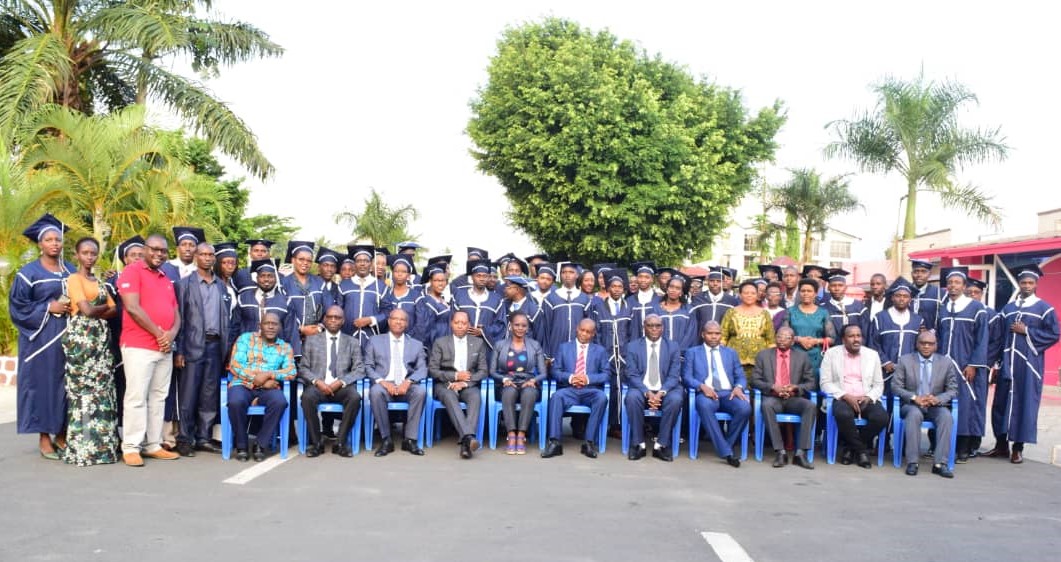
Burundi has graduated 50 freight forwarders practitioners with the East Africa Customs and Freight Forwarding Practicing Certificate (EACFFPC), as the region seeks to professionalize the industry.
Out of these, 14 were females, an impressive number that demonstrate that the women are also keen on engaging in an industry that has over the years been dominated by men.
The 5th graduation ceremony, which was held at hotel La Détente, was presided over by Deputy Commissioner General – KABURA Léopold.
Also present during the graduation were the Deputy Commissioner General, the Commissioner in Charge of Customs and Excise, the Commissioner of Customs operations, the Director of Customs services and e business, the Vice President Burundi Federal Chamber of Commerce and Industry, NCIC members and Trainers.

The EACFFPC is a mandatory training program to all Customs Agents jointly implemented by the EAC directorate of Customs, the East Africa Revenue Authorities (EARAs) and the national associations of the freight forwarding industry affiliated to the Federation of East African Freight Forwarders Associations (FEAFFA).
The training is offered to individuals already practicing or intending to practice in the clearing and forwarding industry throughout the East African region.
Since 2007 when the EACFFPC training programme was started, over 6000 customs agents and freight forwarders have graduated and qualified from the program in the region.
Trademark East Africa (TMEA) has been supporting the implementation of this program since 2011 to equip agents with desirable competencies in the discharge of their functions in to enhance compliance, professionalism and facilitate trade.
Initially, TMEA supported implementation of the program between 2011 and 2014 to accelerate attainment of a critical mass of approximately 4500 trained clearing and forwarding agents or at least two trained persons per licensed customs agent and freight forwarding firm in East Africa.
FEAFFA is currently engaging experts to review and update the curriculum to include among other key changes; the introduction of the Continuing Professional Development (CPD). The CPD framework and implementation guidelines and tools to guide for the implementation of the program were developed.
The new training curriculum update, which has also been supported by the TMEA, will ensure that all the EACFFPC graduates are kept technically and professionally updated, as the industry takes new and dynamic trends.
The CPD will test three major components; technical competencies, emerging issues and matters on leadership and personal development.
“FEAFFA has already developed the CPD framework with the implementation guidelines and tools. The tools will guide the National Curriculum Implementation Committees (NCICs) of national associations of customs agents and freight forwarders in the region in piloting and rolling out the program in their respective countries,” FEAFFA President Mr. Fred Seka told Freight Logistics magazine in an earlier interview.
Uganda and Rwanda were earmarked for the piloting of the CPD program to ascertain its success before rolling it out fully in the entire East Africa Community (EAC) region. Preparatory meetings for piloting the program have already been held in the two countries. These meetings helped in drawing roadmaps on how the program piloting should be rolled out. The roadmap included the development of a comprehensive stakeholder analysis and mapping, identification of areas CPD activities will address and drawing a CPD calendar for piloting.
“The focus now is to make sure that the training is in tandem with the current and future market needs and competencies required in the freight logistics sector. Once this is addressed, the newly updated curriculum will be rolled out in the next two years in the EAC region,” Seka said.
The need to reduce freight logistics related costs in the East African region through improved knowledge and skills of freight forwarders, clearing agents and warehouse operators is what has prompted the ongoing review.
Also, the need to enhance professionalism through professional certification of practitioners, the need to enhance compliance to existing regulations to guarantee quality of services offered within the industry and standardizing the industry with a view of making it competitive both regionally and internationally, also persuaded the ongoing review.
FEAFFA will introduce an advanced certificate of higher – level qualification that will build on the success of the EACFFPC program which intends to expose practitioners to global best practices. The training materials have also been updated and a strong warehousing module introduced to address the skills gaps in warehouse management.
Training will also focus on enhancing online learning for customs agents, freight forwarders and warehouse operators through the enhanced FEAFFA Online Resource Centre (FORCE) which currently hosts courses on Rules of origin. This will be critical due to Covid19 pandemic that has affected people relations.
“The portal will ensure that training is available and accessible in many parts of the region,” Seka said, and added that there were plans to integrate this platform with those of the training institutions of the East African Revenue Authorities (EARAs).
Once fully rolled out, training under the new curriculum will be mandatory for industry practitioners in East Africa. Agents will not only be required to attain the minimum professional certification but will also fulfil CPD requirements as a prerequisite for licensing by the revenue authorities.