Viaservice Financial Services Ltd is finalizing a feasibility study to roll out a container guarantee facility in Kenya after successful operations in Tanzania since March year.
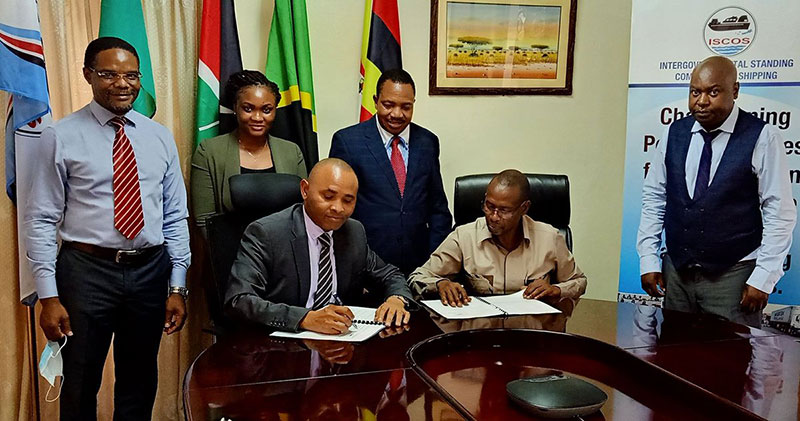
This is after it signed a memorandum of cooperation with the Intergovernmental Standing Committee on Shipping (ISCOS) which has stepped up the push for the removal of container cash deposit.
Container deposits have over the years been flagged as a major trade barrier by both the private and public sectors.
To reach the region, Viaservice Financial Services Ltd will ride on the new collaborative framework with ISCOS, a regional organisation formed in 1967 by the Member States of Kenya, Tanzania, Uganda and Zambia to take care of their common shipping, maritime and logistics interests.
“Currently Container Guarantee has pioneered in Tanzania for both local and transit containers and there are plans of expanding to Kenya, West Africa, Southern Africa and other parts of the world,” John Mathenge, Viaservice Managing Director said.
Container Guarantee was first tried by insurance companies in 2017 without much success. It was supposed to protect the commercial interests of shipping lines and importers who tie huge operating costs when they pay container deposits.
A new standard 20-foot container can cost more than USD 3,000; a standard 40-foot container may cost USD 4,000. To protect its resources, shipping lines demand container deposits before releasing containers to consignees or freight forwarders. The risks associated include theft, damage, abandonment or detention for prolonged periods.
The 13th Northern Corridor Integration Projects Heads of State Summit held in April 2016 directed the Ministers responsible for Finance and Trade to ensure that shipping lines and insurance companies finalized and signed an agreement on elimination of cash deposits for containers, which still persists to date.
The shipping agents charge $500 and $1,000 for a 20-foot and 40-foot container respectively, for cargo destined for Kenya: Those in transit are charged between $1,000 and $5,000 for a 20-foot and 40-foot container respectively.
The cost is determined by geographical location, market demand and the size of the container.
USAID, East Africa Trade Investment Hub carried out a study in 2017 on the impact of container deposits on Rwandan traders using Mombasa port.
“Often, when the imported goods reach Mombasa, the companies may not have available cash to make container cash deposits. It can take an additional two to four weeks to actually make the container cash deposits,” the report noted.
In September this year, Shippers Council of Eastern Africa (SCEA) executive officer Gilbert Langat said the cost of container bonds affect final consumer prices.
“We can no longer afford to import large quantities since each container is subjected to about $500 in charges, and the amount doubles for a 40-foot container, hence making it very expensive to traders who import millions of units. The cost is directly passed on to the consumers,” said Mr Langat.
The container guarantee has numerous benefits as opposed to container deposit. They include prompt settlement of all shipping line’s obligations related to demurrage, damage, and total loss of container
It also eliminates shipping lines bad debts related to demurrage, damage, and total loss of containers. Unlike container deposit, guarantee covers total liability for demurrage, damage, and total loss of container as it removes the administrative burden of container deposit.
Service will be availed to shipping lines free of charge and has a user-friendly online digital system for managing the guarantee’s life cycle.
It is a friendly alternative to container deposit for the convenience of shipping lines customers and removes misconceptions about the deposit, improving relationships between parties.
It has improved container turnarounds and dwell time by facilitating earlier full container release and empty repositioning.
With the deployment of the solution across borders, the gap between shipping lines and their customers in land-linked countries will be bridged thus improved business relations.