
Burundi’s logistics and freight forwarding sector continues to record significant progress in professional development following two key recent milestones, the graduation of 41 students under the East Africa Freight Forwarding Practicing Certificate (EACFFPC) programme at Pearl Residence in Bujumbura and a parallel Continuing Professional Development (CPD) graduation conducted in Bujumbura and at the Kobero border post. These back-to-back achievements reflect a strengthened national drive to build professional capacity in the freight forwarding industry while aligning Burundi more closely with regional standards across the East African Community.
The EACFFPC graduation marked the entry of 41 newly trained freight forwarding professionals equipped with modern competencies in customs operations, freight logistics and trade facilitation. At the same time, the CPD graduation brought together practising freight forwarders who underwent targeted refresher training designed to enhance operational efficiency and compliance in real trade environments. The training covered key areas including the WTO Agreement on Customs Valuation, regional integration frameworks such as the African Continental Free Trade Area (AfCFTA), freight logistics systems, as well as ethics and professional integrity, all aimed at strengthening professionalism and service delivery in the sector.

These initiatives are anchored in a broader regional capacity-building framework jointly implemented through strong collaboration between the Federation of East African Freight Forwarders Associations (FEAFFA), the EAC Directorate of Customs, the National Associations of Freight Forwarders in each of the EAC Partner States, and the Revenue Authorities of all East African Community Partner States, including the Office Burundais des Recettes (OBR) in Burundi. At the national level, the Association Burundaise des Agences en Douane et Transitaires (ABADT) serves as a key implementing partner, working closely with these regional institutions alongside development partners such as TradeMark Africa (TMA) to deliver professional training programmes in a coordinated and harmonised manner across the region.
Over the years, TradeMark Africa (TMA) has played a central role as a leading development partner supporting the design, enhancement and implementation of regional freight forwarding training programmes, helping to ensure that capacity-building interventions remain sustainable and aligned with regional trade facilitation priorities. National associations of clearing and forwarding agents such as ABADT play a critical role in mobilising participants, coordinating implementation and ensuring effective local delivery of the training programmes in collaboration with public and private sector stakeholders.
The graduation ceremonies were attended by key industry leaders, underscoring the importance of the initiative. Present were ABADT President Floribert Nzoyihera, the NCIC Chairperson, a representative of the General Commissioner of OBR Mr Rurimbuka Sébastien, and Immediate Past President (IPP) of FEAFFA Mr Philippe Ndikumana representing FEAFFA. Their participation highlighted the strong institutional collaboration driving Burundi’s logistics sector transformation and the shared commitment to regional integration, professionalism and trade facilitation.
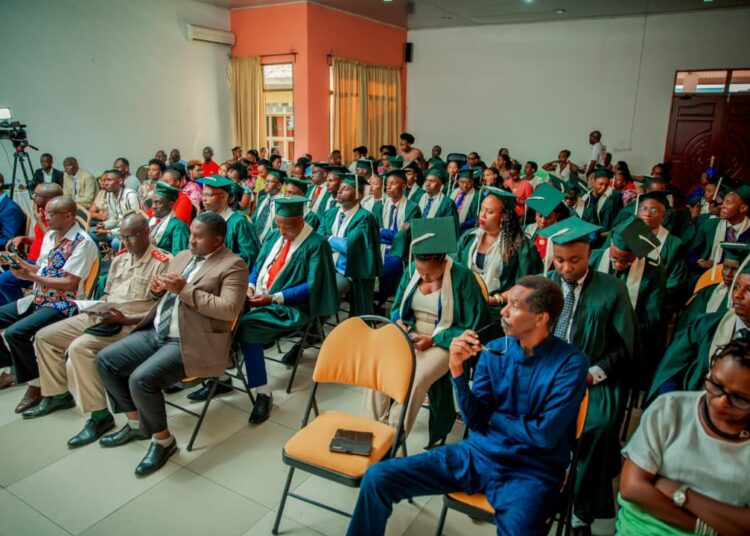
The programmes are particularly significant in addressing long-standing capacity gaps between Burundi and other East African Community Partner States. While the updated Certificate in Customs and Freight Logistics (CCFL) curriculum has already been adopted across much of the region, Burundi continues to successfully implement the old East Africa Freight Forwarding Practicing Certificate (EACFFPC) programme while preparing for the transition to the revised curriculum. One of the key implementation considerations has been the translation and contextualisation of the updated training materials into French to ensure effective delivery and maximum learning outcomes for participants. This process requires careful technical adaptation to maintain consistency with regional standards while meeting local training needs. In the interim, the EACFFPC and Continuing Professional Development (CPD) programmes continue to play a critical role in equipping freight forwarders with current industry knowledge and competencies, ensuring that practitioners remain aligned with evolving regional and international trade requirements as preparations for the CCFL rollout progress.
The training content was aligned with both regional and international frameworks, reinforcing practical competence in customs valuation, trade facilitation, AfCFTA implementation, freight logistics management and professional ethics. This alignment is critical as the region moves toward more harmonised customs procedures and digitally driven trade systems that demand higher levels of professional expertise.
Speaking during the ceremony, ABADT President Floribert Nzoyihera commended the initiative, noting that it has significantly strengthened the technical capacity of both new graduates and practising agents. He emphasised that Burundi’s logistics sector is undergoing a critical transformation aimed at improving efficiency, competitiveness and alignment with regional standards. The representative of the OBR Commissioner, Mr Rurimbuka Sébastien, highlighted the importance of continued collaboration between regulatory authorities and private sector stakeholders in advancing customs reforms and trade facilitation. From a regional perspective, IPP Philippe Ndikumana, speaking on behalf of FEAFFA, reaffirmed that CPD programmes remain central to professional development in the freight forwarding industry, stressing the importance of continuous learning in closing skills gaps and improving service delivery.

TradeMark Africa, as a key development partner supporting regional trade facilitation and capacity-building initiatives, reiterated its commitment to strengthening logistics performance and enhancing the competitiveness of trade intermediaries in Burundi and the wider region. ABADT, as the key implementing partner, was also recognised for its critical role in coordinating stakeholders and ensuring effective delivery of the programme on the ground, while OBR, as the national Revenue Authority, continues to play a central role in customs administration and technical support within this broader regional framework coordinated through FEAFFA and the EAC Directorate of Customs.

The dual graduations represent more than milestone events; they signal a structured and sustained effort to build a professional, competitive and regionally integrated freight forwarding industry in Burundi. As stakeholders continue to advance preparations for the transition to the updated CCFL curriculum, including the localisation of training materials and implementation arrangements, these interventions remain essential in ensuring that Burundi’s freight forwarders continue to develop in step with their regional counterparts, strengthening the broader vision of a harmonised East African logistics sector where no practitioner is left behind.
The writer, Andrew Onionga, is the Communications and Advocacy Officer at the Federation of East African Freight Forwarders Associations (FEAFFA) secretariat and can be reached at oniongaam@gmail.com.