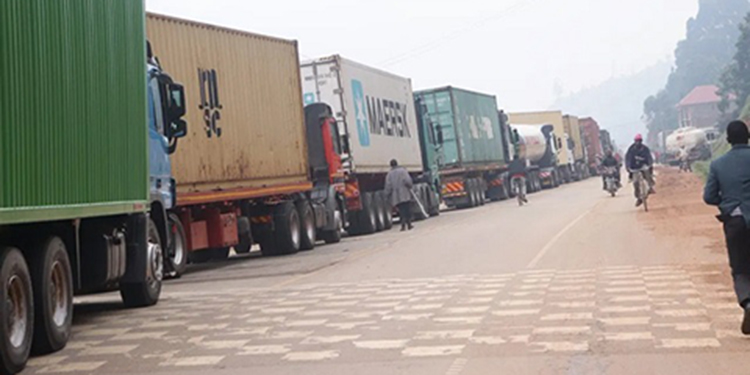
Normal cargo movement has officially resumed along the critical Nimule–Juba corridor after more than 10 days of disruptions that had temporarily affected regional transport and logistics operations into South Sudan.
The development comes as a major relief to freight forwarders, transporters, clearing agents, and cargo owners across Kenya, Uganda, and South Sudan who depend on the corridor for trade and transit operations.
The disruption followed concerns raised by long-distance drivers operating along the South Sudan route regarding operational safety and working conditions, prompting the temporary suspension of transport activities and calls for stakeholder engagement to address the issues raised.
Given the strategic importance of the corridor to regional trade, the situation attracted attention from both public- and private-sector stakeholders across the region.
Following consultations involving the Government of South Sudan, driver representatives, the South Sudan Revenue Authority (SSRA), and industry stakeholders, an agreement was reached to restore normal cargo movement along the corridor.
The engagement process involved a delegation led by SSRA Deputy Commissioner General Solomon Ariik, who represented the South Sudan Revenue Authority during the consultations aimed at resolving the matter and restoring confidence along the trade corridor.
Throughout the engagement process, the South Sudan Freight Forwarders Association (SSFFA), a member association of FEAFFA, played an active coordinating and facilitative role in supporting dialogue among stakeholders and efforts aimed at restoring confidence and stability along the route.
Following the successful engagements, SSFFA issued an official advisory calling on drivers and transporters to resume operations immediately through the Elegu–Nimule border crossing. The association also advised transporters to ensure that all customs and tax obligations are fully settled before departure to avoid unnecessary delays at exit points.
FEAFFA notes that the engagement and coordination process was led professionally by SSFFA President Daniel Deng, who played a central role in stakeholder consultations, communication, and coordination throughout the period.
Speaking following the restoration of operations, Mr. Deng emphasized the importance of dialogue and regional cooperation in safeguarding trade along the corridor.
“Our priority has been to ensure that transport operations return to normal in a peaceful and coordinated manner while also addressing the concerns raised by stakeholders. The Nimule corridor is very important to the economies of South Sudan, Uganda, and Kenya, and we remain committed to working with all partners to support a safe, efficient, and predictable trading environment,” he said.
Throughout the developments, SSFFA maintained a constructive approach focused on engagement, trade facilitation, and the smooth movement of cargo. The Association continued to reassure transporters and freight forwarders while advocating for operational stability along the corridor.
The resumption of cargo movement is a positive development for regional trade, given the importance of South Sudan as a key export and transit market served through Kenya and Uganda. Efficient operations along the corridor remain critical for freight forwarders, transporters, customs agents, and businesses that depend on seamless cross-border logistics within the region.
FEAFFA continues to encourage collaboration among government agencies, transport associations, revenue authorities, and private sector stakeholders to strengthen corridor efficiency, improve operational conditions, and support uninterrupted regional trade across East Africa.
The writer, Andrew Onionga, is the Communications and Advocacy Officer at the Federation of East African Freight Forwarders Associations (FEAFFA) secretariat and can be reached at oniongaam@gmail.com.